
'%20x='0'%20y='0'%20height='100%25'%20width='100%25'%20%0A%20%20%20%20%20%20%20%20%20%20xlink%3Ahref='data:image/jpg;base64,/9j/2wBDAAYGBgYHBgcICAcKCwoLCg8ODAwODxYQERAREBYiFRkVFRkVIh4kHhweJB42KiYmKjY+NDI0PkxERExfWl98fKf/2wBDAQYGBgYHBgcICAcKCwoLCg8ODAwODxYQERAREBYiFRkVFRkVIh4kHhweJB42KiYmKjY+NDI0PkxERExfWl98fKf/wgARCAAGAAoDASIAAhEBAxEB/8QAFgABAQEAAAAAAAAAAAAAAAAAAAQH/8QAFAEBAAAAAAAAAAAAAAAAAAAAA//aAAwDAQACEAMQAAAA2CoJP//EAB4QAAMAAgEFAAAAAAAAAAAAAAECAwQFABEiMTKh/9oACAEBAAE/AMnTOzb2Kuxk80KI96HvZy5P3mBprywcSYyqdEgi+5Phef/EABgRAAIDAAAAAAAAAAAAAAAAAAABAjJx/9oACAECAQE/AJ3WH//EABcRAAMBAAAAAAAAAAAAAAAAAAACMoH/2gAIAQMBAT8AWdP/2Q=='%3E%3C/image%3E%3C/svg%3E)

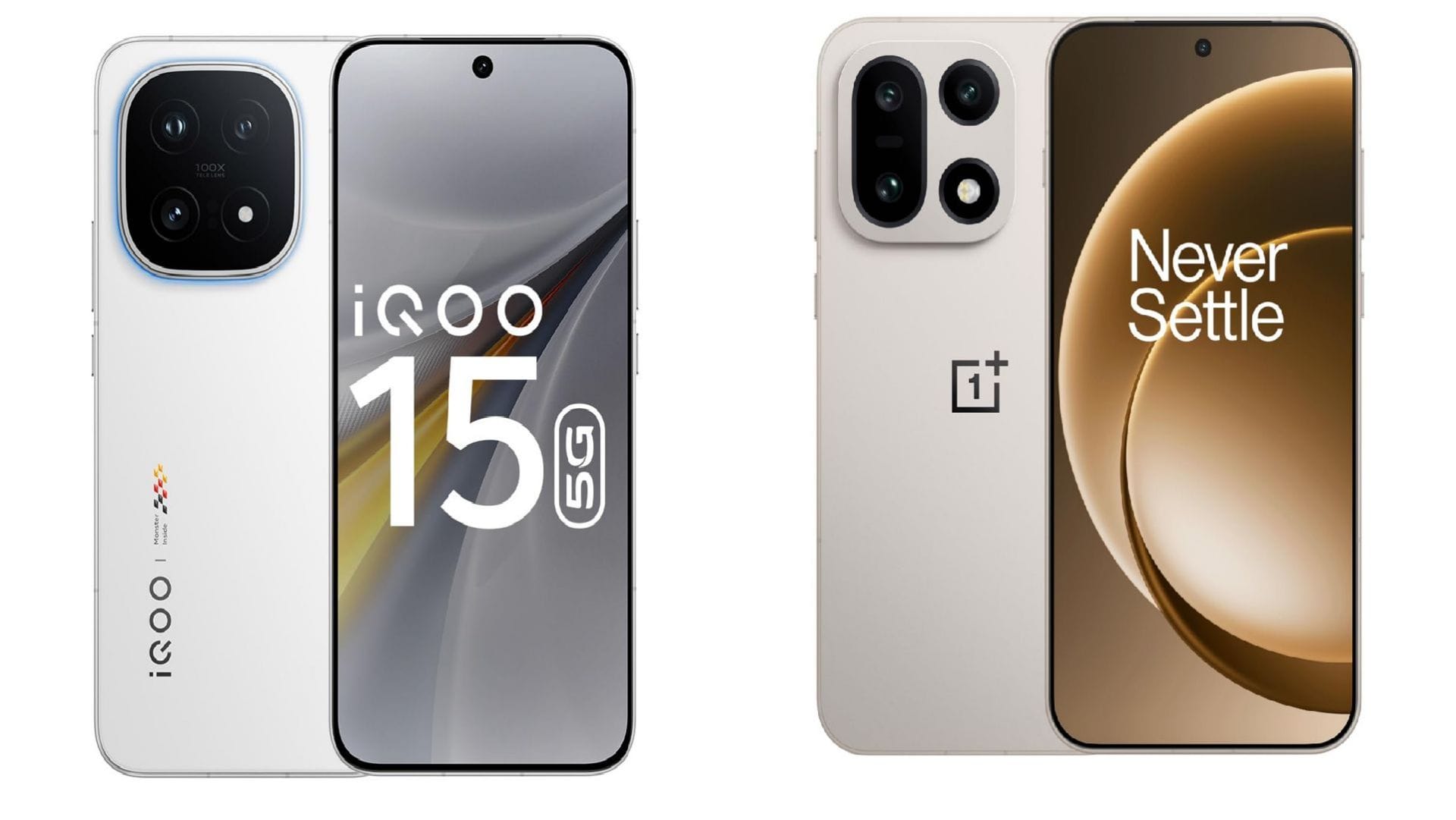
The iQOO 15 and the OnePlus 15 are flagship models and can be value-for-money investments. Both devices were released in November 2025, have almost similar features, and are available at the same price range. This makes it a tough choice for customers looking for a powerful flagship device.
OnePlus mobile phones are popular in the Indian Android market, but iQOO has begun to eat up some of the former's market share with its mobile phones built around the latest technology and hardware. This article compares the various aspects of two devices to help you make a well-informed decision.
iQOO 15 vs OnePlus 15: Detailed comparison
Specs comparison
Check out the specs of the iQOO 15 vs the OnePlus 15:
 Trending
The major difference between these two devices is in the size of their display screens, operating systems, battery, and selfie camera. Let's get into the details now.
Design, built quality, and display
These devices are not much different in build quality and display. The iQOO 15 has a 6.85" screen with a 2K M14 LEAD OLED display that produces 6,000 nits of brightness, making it one of the brightest phones in the market. It also delivers almost 508 pixels per inch and up to 144 Hz refresh rate, offering an impressive gaming experience.
The OnePlus 15, on the other hand, has a 6.78" screen with a 1.5K LTPO AMOLED display. It offers 450 pixels per inch and a refresh rate up to 165 Hz, reducing the chances of screen tearing and enhancing your gaming experience.
Overall, the OnePlus 15 falls short in this category, as it offers a slightly smaller screen and lower pixel-per-inch density. But if you are more concerned about the refresh rate, the OnePlus 15 wins the race.
Performance, gaming, and software
Both iQOO 15 and OnePlus 15 are powered by the Qualcomm Snapdragon 8 Elite Gen 5 and have a high-end 3nm flagship SoC with impressive CPU and GPU capabilities.
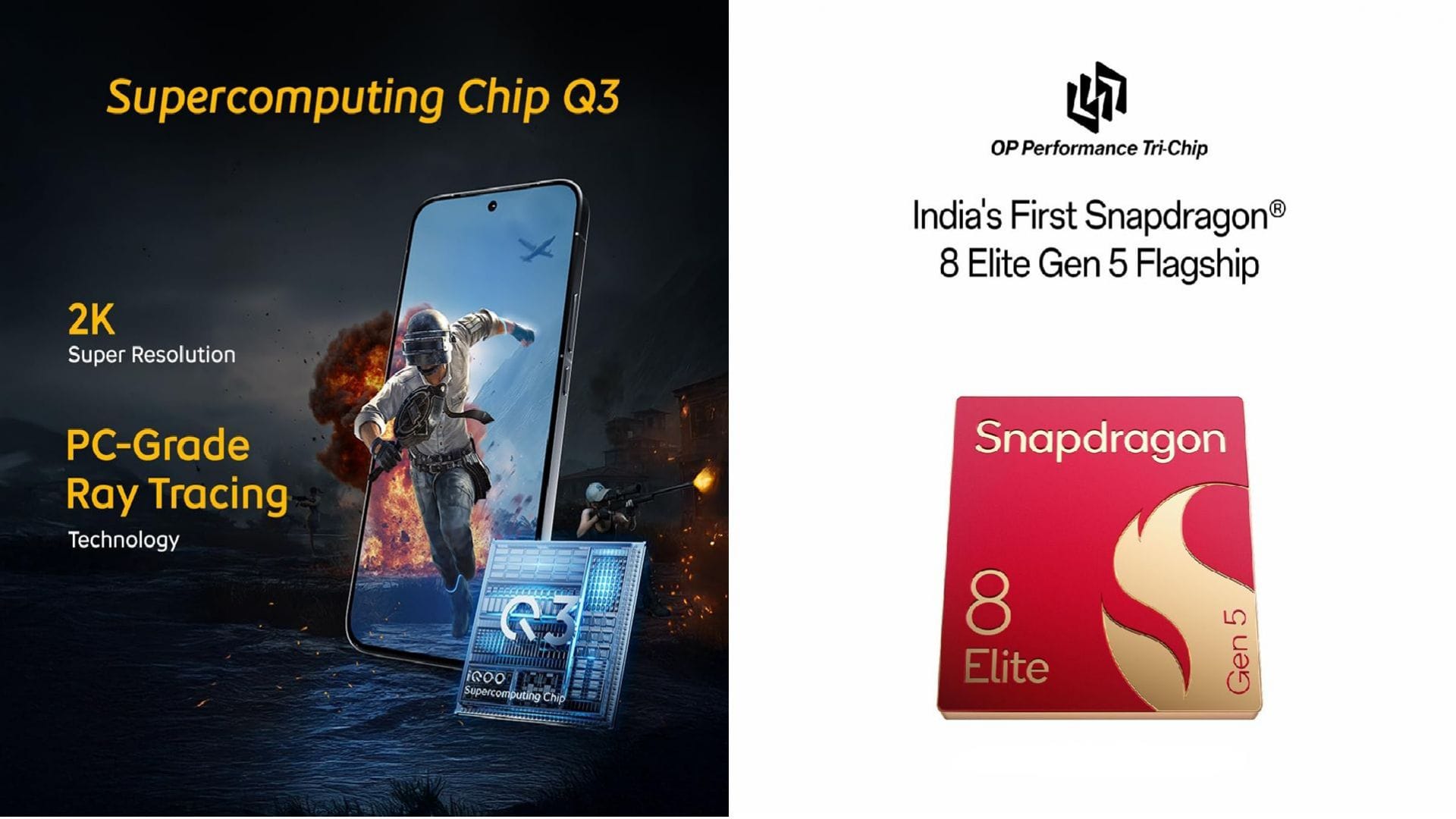
iQOO 15 features a Supercomputing Chip Q3, while the OnePlus device trusts its tri-chip architecture to provide users with the best experience. In this architecture, they add a dedicated touch-response chip and a separate WiFi chip in addition to the main Snapdragon chip to improve responsiveness and connectivity.
In terms of software, both phones run on Android 16. The OnePlus 15 uses NothingOS for a clean and optimized Android experience. Combined with the tri-chip architecture, this helps in improving responsiveness when using games and other applications.
iQOO 15 uses OriginOS, which has a revamped UI, smooth animations, and is also optimized for gaming. So, you can expect an impressive performance from this device, as well.
Memory and storage
The OnePlus phone comes with multiple RAM and storage options, as does the iQOO 15. You can get different variants of the OnePlus phone, from 12 GB to 16 GB of RAM and 128 GB to 1 TB of internal storage. The iQOO 15 variants are also available with 12 GB and 16 GB RAM and 256 GB to 512 GB internal storage.
Camera, battery, and charging
Both devices have three 50 MP rear cameras. While the OnePlus phone has a 50 MP selfie camera as well, the iQOO 15 only features a 32 MP selfie camera. OnePlus cameras have earned widespread applause over the years for their impressive camera quality.

The OnePlus 15 also features a 7,200 mAh battery with 120 W wired fast charging and 50 W wireless fast charging. iQOO 15 consists of a 7,000 mAh battery with only 100 W wired fast charging and 40 W wireless fast charging. This is another aspect where the OnePlus phone wins.
Final verdict: Which smartphone is better?
After a detailed comparison, it's evident that despite losing on the display front to the iQOO 15, the OnePlus phone has bounced back stronger. While there aren't many differences between the devices regarding the chipset and operating system they use, the OnePlus device has a better camera, a more powerful battery, and a better fast-charging feature.
Both devices cost ₹72,999. If you are a gamer, a content creator, or are looking for a device with longer runtime, the OnePlus smartphone is a better choice at this price range.
Also read: OnePlus 15 vs Samsung Galaxy S25 comparison


